Though the weather is getting colder and colder, the Northfield area has yet to see significant snowfall. This begs the question — how are St. Olaf’s skiers practicing for competitions without snow? What weather conditions do ski races take place under, and how do athletes prepare for races without the right conditions?
St. Olaf has two types of ski teams — Alpine and Nordic. Alpine skiing is downhill, while Nordic skiing is cross-country. Both of these teams have ways for athletes to practice year-round, even in weather conditions that do not mirror those of competitions.
“Most of our races take place in anywhere from 10 to 25 degrees,” Nordic Ski Coach Tor Hanson ’23 said in an interview with The Olaf Messenger. During nationals, “It can be anywhere to 45 to 50 degrees, where the snow is actively melting underneath.”
Still, the Nordic team needs snow to compete, and while their official season began on Oct. 15, their first race is in January. Until then, the Nordic team can sometimes be seen seemingly rollerblading around campus.
“We have what are called roller skis,” Hanson said. “It’s a long piece of metal or composite, and then it has a wheel on each end made of rubber. And that is not the same, but it’s as close as we can get to regular snow skiing throughout the summer. So, they train on those in the spring, summer, and fall.”
Alpine races can also occur under a variety of conditions.
“We race in pretty much anything, whether it’s freezing cold or snowing, as long as visibility is within regulation and it’s not too cold,” Ella Robb ’27, a member of the Women’s Alpine Ski Team, said in an interview with The Olaf Messenger.
If there’s not a lot of snow on the ground, “mountains will artificially make snow and then natural snow will get mixed in,” Women’s Alpine Ski Team member Jessica Stanton ’26 said in an interview with The Olaf Messenger.
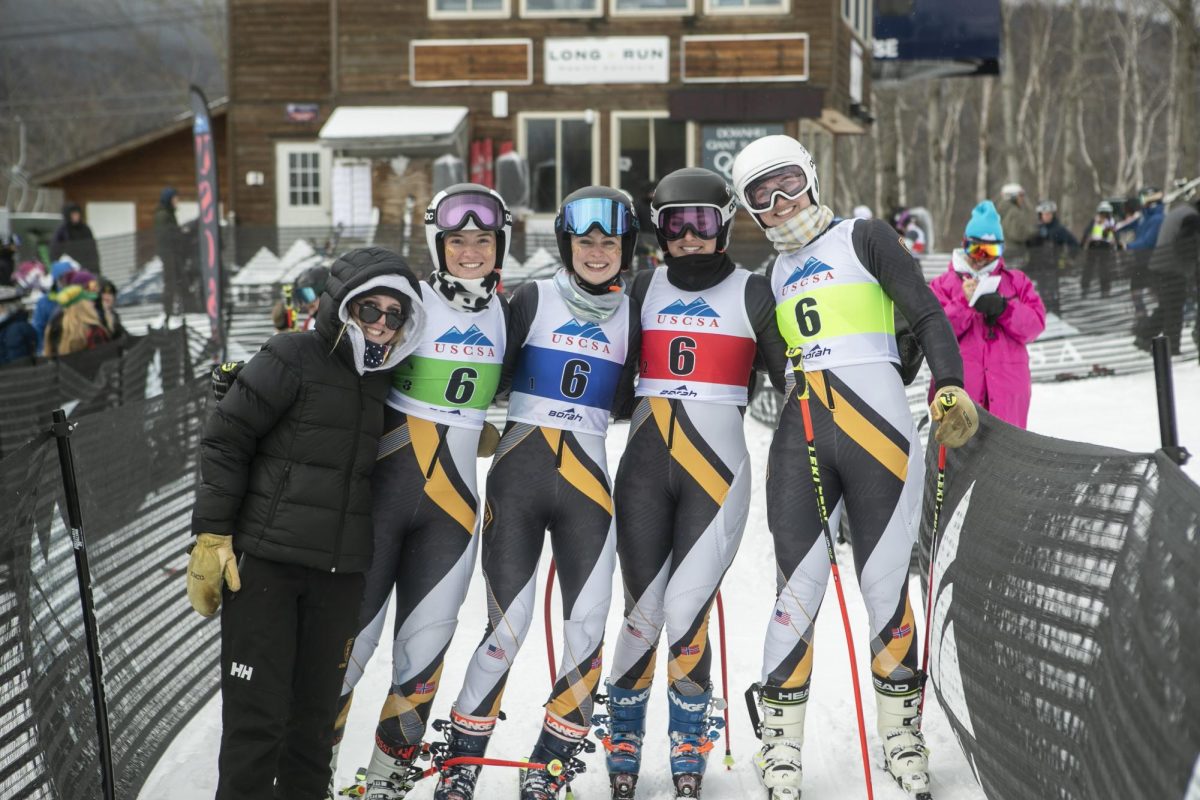
The St. Olaf Alpine Ski Team competes in three series: U.S. Ski and Snowboard Association (USSA), International Ski and Snowboard Federation (FIS), and United States Collegiate Ski and Snowboard Association (USCSA), with the first USCSA race being in January.
“That’s like nationals. We’re competing against other schools,” Stanton said. “Versus the other two are kind of just local teams and clubs.”
Similar to the Nordic Ski Team, the Alpine Ski Team also finds ways to train without snow.
“We do dry land throughout the fall semester, and basically until we can get on snow,” Stanton said. “Some years it’s way earlier, sometimes it goes to the middle of December. It all depends.”
“We meet five days a week in the afternoon just doing some cardio-based workouts, strength-based workouts,” Robb said.
Though the team can’t downhill ski without snow, there are ways to simulate that movement to practice year-round.
“I have a little alpine trainer at home where you kind of just go back and forth across this platform,” Robb said. “We’re mostly just building muscle for similar movements, but the same muscles we would use in a different move.”