When it comes to female artists who have reshaped an industry, I can think of no better example than the late great architect Dame Zaha Hadid. Known globally as the “Queen of the Curve,” Hadid became the first ever woman to win the Pritzker Architecture Prize in 2004, and her work continues to influence how cities design their skylines and public spaces. Her buildings were dynamic, sweeping, and futuristic in a way that challenged ideas of form and function. Her style of deconstructivism — a post-modern architectural movement — enabled her to utilize fragmentation, non-rectilinear shapes, and controlled chaos to create complex and almost unstable-looking structures.
Born in Baghdad, Iraq in 1950, Hadid studied mathematics before turning to architecture, a division of study that would come to inform her signature style of geometry in motion. She received her training from the Architectural Association of London, where she was mentored by world-famous deconstructivist architect Rem Koolhaas of the Office for Metropolitan Architecture, before going on to gain recognition for her radical conceptual drawings.
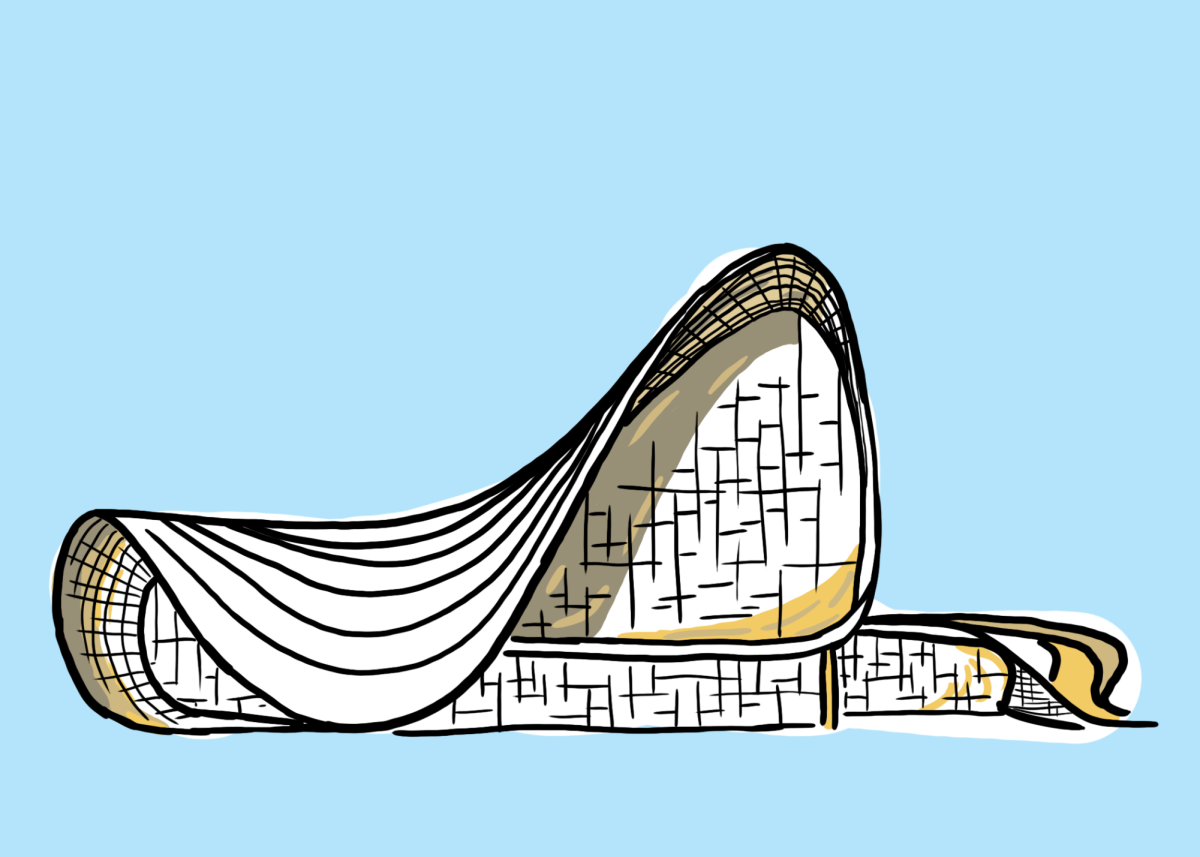
Many critics initially dismissed her work as being unbuildable, but by 1993, her persistence paid off when she unveiled the Vitra Fire Station in Weil am Rhein, Germany. It proved to the world that her work, while certainly unusual, was definitely possible to build. She continued to unleash her potential, especially in the 2000s, with the National Museum of XXI Arts in Rome, the Phæno Science Center in Germany, the Guangzhou Opera House in China, and my personal favorite, the Heydar Aliyev Center in Baku, Azerbaijan.
Hadid pushed the boundaries of what architecture could communicate, while simultaneously inspiring technological innovation. Her firm practiced advanced digital modeling well before it became an industry standard, and it still remains a cornerstone of contemporary practice in architecture.
More than anything, Hadid’s work carried symbolic weight. As a woman leading one of the foremost architectural studios in the world, Hadid broke barriers in a field historically dominated by men. When she was appointed a Dame Commander of the Order of the British Empire in 2012 for her outstanding contribution to architecture, she opened doors for future generations of designers who saw her as a visionary.
Her passing in 2016 after a sudden heart attack saw the loss of one of the world’s greatest architects, but her legacy remains with the firm she founded, for they continue even now to push the boundaries of modern architecture.