For most high school seniors, their college decision comes down to prestige, the majors or programs offered, or even just the beauty of a campus.
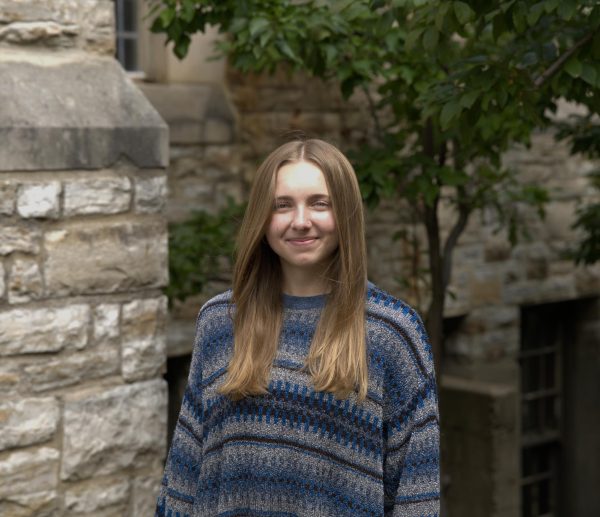
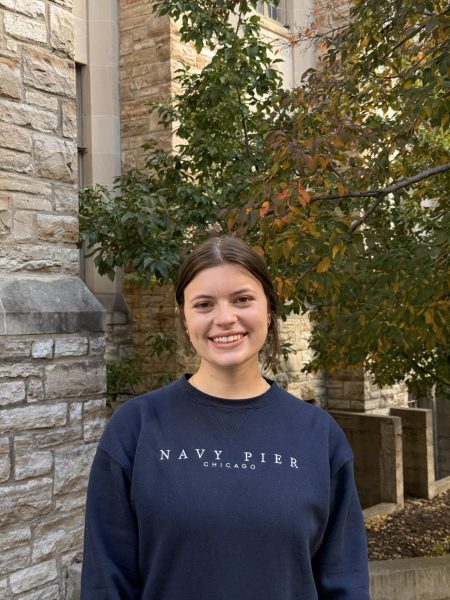
For Nadia Iribe ’30, she first had to make sure that she could even get around campus.
“[My mom and I] knew that we would have to cast a pretty wide net when it came to how many schools we applied to,” Iribe said in an interview with The Olaf Messenger. “St. Olaf seemed out of the cards … it’s literally on a hill.”
Iribe has been a wheelchair user for her entire life. For her and other disabled students, including those at St. Olaf, accessibility is a major determinant of their college experience. Students across campus have dealt with accessibility issues on the Hill, navigating inclines and old buildings that lack elevators or ramps.
Tammara Lawhead ’26, who has endometriosis and chronic knee instability, has faced these struggles. Her issues were exacerbated in November 2025 when her knee dislocated while in Stav Hall, requiring her to get surgery and use crutches for a couple of months.
“I just feel like [accessibility] is so important and so beneficial … people can become disabled at any time,” Lawhead said in an interview with The Olaf Messenger. “It’s a minority that you can technically join at any point in your life, ever, and most people at some point or another will become disabled, even if it’s just temporarily.”
Ada Guetschow ’27 experienced temporary disablement after she broke her foot and was on crutches for several months following the resulting surgery.
“You don’t realize how much of a benefit [accessible infrastructure] has until you really need it,” Guetschow said in an interview with The Olaf Messenger.
Accessibility conversations have become a large part of decision making for higher education institutions — particularly residential campuses like St. Olaf — in terms of construction, renovation, and overall programming. The conversation continues through student advocacy and exploration of potential solutions around campus accessibility.
Accessibility on college campuses
Discussions about accessibility aren’t isolated to St. Olaf. The Americans with Disabilities Act (ADA) — a 1990 civil rights law — works to ensure that people with disabilities have access to the same resources as everyone else in the United States. The ADA is divided into five titles, which can apply to colleges and universities in different ways. When it comes to the built environment, St. Olaf is subject to Title III, falling under the category of a “nonprofit business.”
“As an entity that makes our services available to the public, we’re obligated to make our programs and facilities accessible,” St. Olaf General Counsel Carl Crosby Lehman ’91 said in an interview with The Olaf Messenger.
However, students with mobility issues still face concerns about their ability to even make it to classes.
“I already knew that St. Olaf was inaccessible … when I was in so much pain that it was difficult to walk, I was like, ‘This really sucks,’” Lawhead said in an interview with The Olaf Messenger. “Being on the crutches, I realized so much more just how inaccessible I find [St. Olaf] … especially because I live in Mellby, where there’s no elevator.”
However, despite accessibility issues on campuses, the enrollment of disabled students has been steadily increasing over the years. In the 2019-20 academic year, more than 20% of U.S. undergraduate students reported having a disability, compared to 11% in 2011-12. Furthermore, since 2011, individual public and private institutions have increasingly reported that more than 3% of their students have a disability.
The complications in making St. Olaf accessible
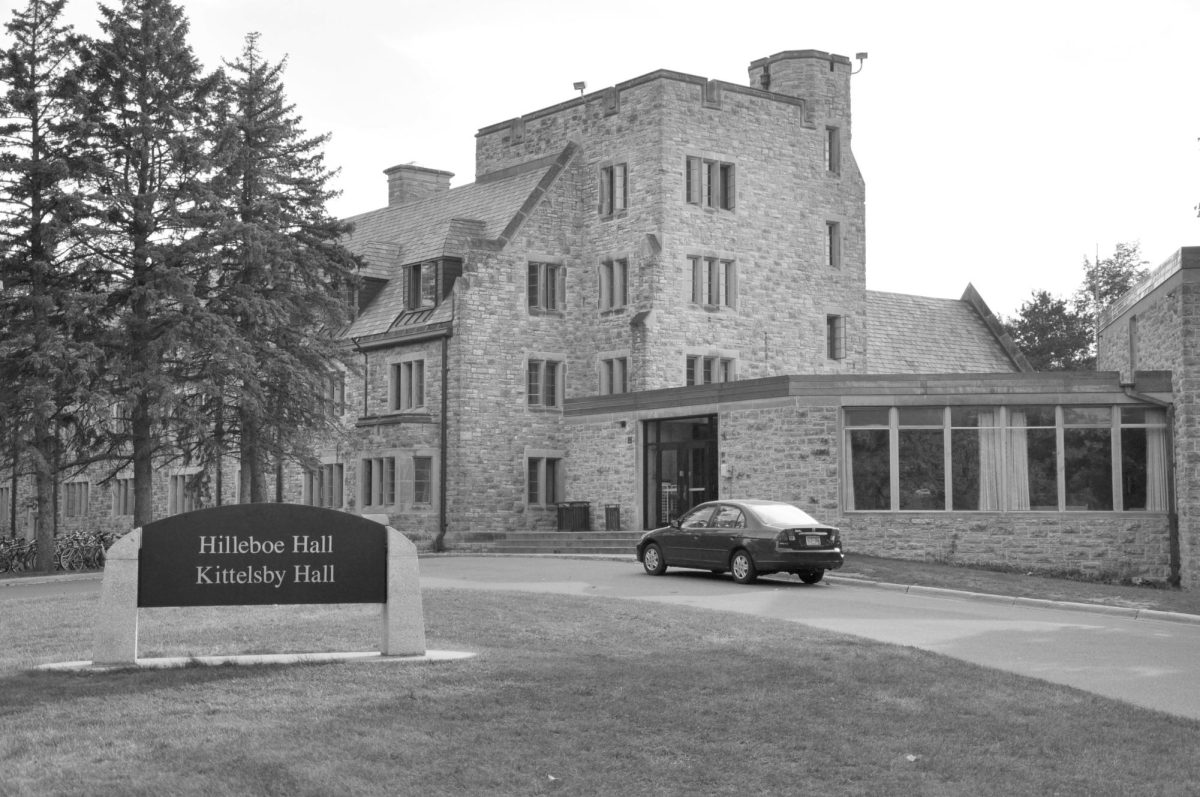
With the greater number of disabled students enrolling in college, concerns regarding accessibility at St. Olaf have increased. For example, even though Hilleboe and Kittlesby Halls were offline for the entire 2024-25 academic year for renovations, no elevators were installed in the buildings.
The ADA mandates that “primary function areas” — building spaces where major activities take place — have accessible paths of travel. When a building undergoes alterations, up to 20% of the alteration’s total cost must be put towards making primary function areas accessible. Such funding was used in the Hilleboe and Kittlesby renovations as they are now accessible by the first floor, with a new ramp up to the main entrance.
The elevator issue — alongside many of St. Olaf’s accessibility issues — is one of old infrastructure. Hilleboe and Kittlesby, although they are attached to each other, only truly share the main lobby. The rest of their floors are unaligned with each other, resulting in difficulties in installing an elevator.
“You would have to try to find a place that matches both elevations,” Director of Facilities Kevin Larson said in an interview with The Olaf Messenger.
“It would have been a significant cost,” Vice President for Business and Finance and Chief Financial Officer Mike Berthelsen added in an interview with The Olaf Messenger. “There were [also] gaps in the initial estimating … the architectural team hadn’t understood that we needed to fully replace the plumbing, which was an enormous thing.”
Other buildings also have unique obstacles. Mellby and Thorson Halls are only accessible using stairs, meaning that students with certain disabilities cannot be housed or visit their friends there. St. Olaf’s location on a hill is an obstacle for students trying to get to buildings such as Skoglund/Tostrud and New Hall, which are also only accessible by stairs or by walking in the road.
“Accessibility was not considered much at all prior to the ’70s or ’80s, even,” Larson said. “Many of our buildings were built in the ’20s, ’30s, ’40s, and ’50s … There’s no simple solution for that without making a real mess of the building.”
Accessibility on campus is complicated even further when considering the individual needs of disabled students — everyone experiences disability differently. DAC staff must consider the feasibility of specific accommodations.
“Parking is one of the most significant ones that we can’t meet,” Director of Equal Opportunity Pamela McDowell said in an interview with The Olaf Messenger. “The other thing that’s important to understand about accommodations is that they’re really fluid. You may have something right now where you don’t need the accommodation … but what if there’s a flare up?”
Bridging the gap
Issues of accessibility across St. Olaf’s campus are continuously being discussed. College staff are working to assist students through individualized accommodations.
“The first thing that students should do is advocate for themselves by making contact with our Disability and Access (DAC) Office,” McDowell said. “In high school, accessibility is all about being successful, and now it’s about having access to education here. It’s not about guaranteeing success, but rather about guaranteeing access to participate in the classroom.”
The DAC also works with the Facilities Department to ensure access to academic buildings and to help meet individual needs.
“Whether it’s a faculty, staff, or student, what do we need to do for that person?” Berthelsen said. “As a long-term goal, we want to have an elevator in all buildings.”
Additionally, according to McDowell, most of the disabilities on campus are invisible, meaning certain accommodations may be invisible as well. McDowell encourages students to share efficient feedback to help the college identify problems and provide support.
“We have to be compliant, and then there’s the ‘shoulds,’” McDowell said. “A welcoming community is usually better than just its compliance.”
Iribe said that she felt welcomed when she visited during an Admitted Students Day. She got to meet with DAC staff, who asked for feedback about her experience in Stav Hall and provided her with an adapted tour of campus.
“Visits [to other colleges] were just actually super inaccessible,” Iribe said. “I often found myself having to sit out, but with St. Olaf … almost immediately someone was ready for us.”
Iribe, an aspiring theater major, was also able to visit the Theater Building as a part of her tour.
“That whole tour itself helped ease pretty much any concerns I had for being kind of lost during the start of the year,” Iribe continued. “I was visualizing myself there.”
Students are still advocating for accessibility in all facets of campus life. For Lawhead, she advocates for accessibility because it is “something that’s not just important for others who need it, but also your future self who could very well be in that situation.”