Migration has shaped the ways humans trace the Earth. Intrinsically connected to the human experience, spreading genes and knowledge through places that were once unknown seems to be a pretty popular activity since… forever. Migration fosters improvement and triggers conflicts. Borders and modern states can be an 18th century invention, but much before that, humans walked and claimed the land. In modern times, legislation has made such movements a more rigid process. However, regardless of their personal beliefs or respect for such laws, millions of people still flock from one country to another, in search of desired change and opportunities. It’s a broad and scattered pursuit, and it can be difficult for anyone to explain what exactly they mean by it: Desires are not always well defined, opportunities may not appear until you look them in the eye.
For a group of individuals, international students coming to a promised land of opportunity, the United States has represented the pinnacle of academic achievement. Making it here would be an undeniable certificate of accomplishment and a clear path for a better economic future. It was promised to them, through compatriots’ voices echoing back chants of victory from this golden land back to their home countries, or via the silver tube set in the middle of the living room that delivered packaged propaganda to their young eyes. That was the goal. So they set off to the pursuit.
Statistics point to an estimate of 1.1 million international students living in the United States in the 2024-2025 academic year, an increase of 5.5% from the 2023-2024 period. Although halted by the COVID-19 pandemic in 2020, the influx of these students has since gone up, surpassing pre-pandemic levels. The countries that mostly send students are India and China, representing 30.8% and 22.6%, respectively. The third leading country, South Korea, stands distantly in the ranking, with a shy 3.3% representation. The vast majority of these students come into the country under a F-1 visa, which allows them to be enrolled in a program or course of study that culminates in a degree, diploma, or certificate. It is a long and expensive process, generally accompanied by a lot of scrutiny over the solicitor’s and their family members’ personal details, besides the many different fees to be paid. Once in, if in, a new set of hurdles and hoops appear regarding maintaining visa status, legal hours of work, specific course loads, and many deadlines. It is a privilege they do not take for granted. It is also a difficult status to juggle in the present time.
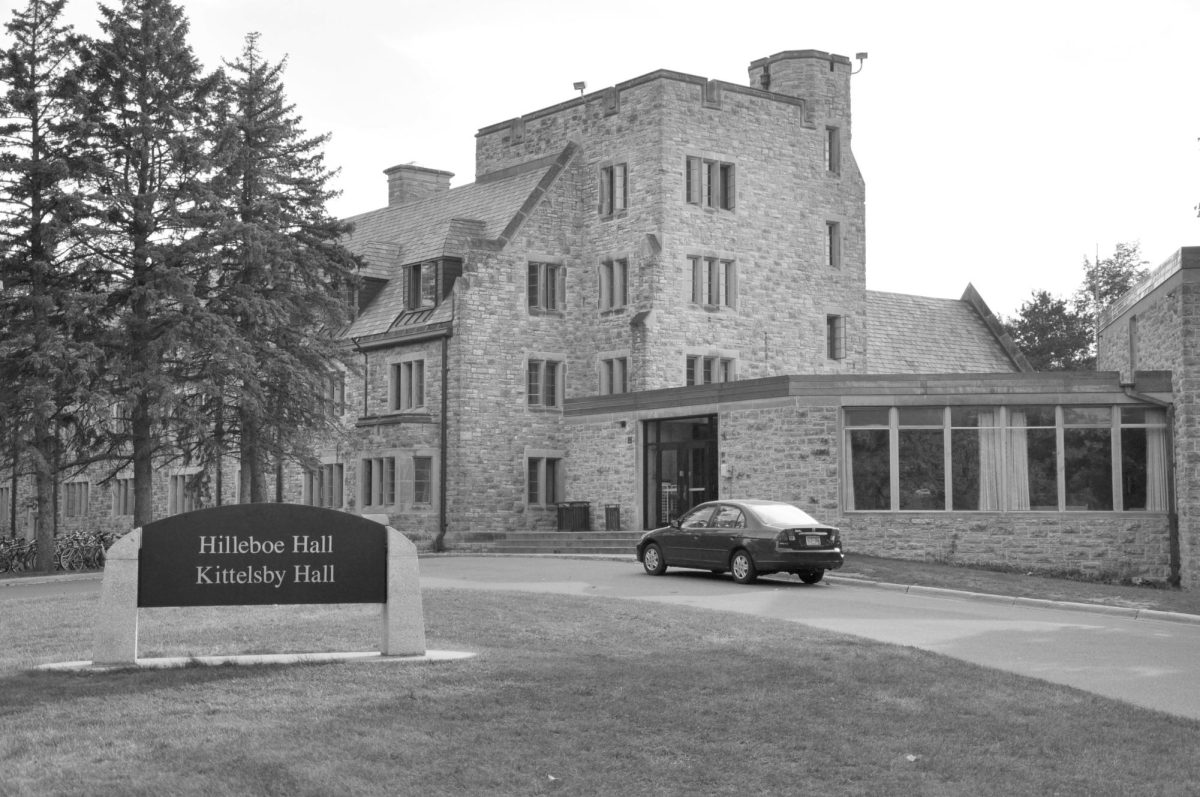
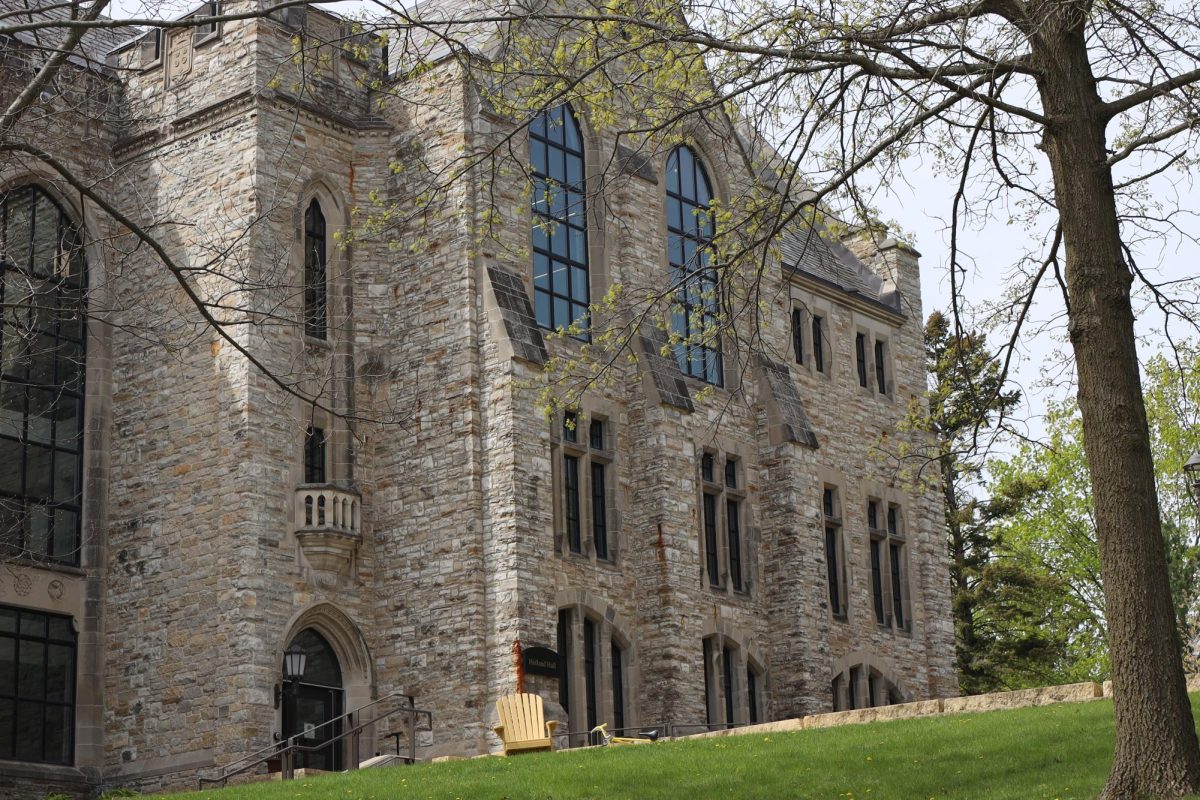
Minnesota is not considered a particular hot spot for international students, but it houses a sizable number of roughly 15,000 higher education students that arrived on a visa. St. Olaf College, with its 3000 or so students, has a sizable percentage of international students, around 11%. These students, most of them thousands of miles from their hometowns, live in a tight knit community on the hill, and find solace on others experiencing the same journey.
“I’ve arrived here with two suitcases and a dream,” M joked while cooking a homemade dish, speaking on condition of anonymity. “I had to fetch the spices for this stew from a market 45 minutes away from here. At least I got a free ride there.”
One of the bigger complaints among this community is that transportation in a small town such as Northfield is not reliable nor broad enough — a car is a massive investment for a group that has their hourly income averaging $12 an hour. So, most of them rely on the good will of friends or rearrange their agenda around a bus schedule that is not accurate most of the time. The cold is another complaint, but they “signed up for it.” Nodding heads and laughs follow that statement. They signed up for many things, knowingly or not. Some of them might have not been an accurate reflection of the truth.
The growing difficult of being international
St. Olaf’s Associate Director of International Student Programs Brisa Zubia has been working with international students for over 15 years, and has observed countless trends and administrative moves regarding this demographic. In 2026, she attentively observes this international graduating class. There are two main groups as she sees: the ones who want to return to their home country, and the ones who seek a pathway to stay. Upbringing and background play heavily into the category one can fall into, but ultimately, it is a personal choice.
“That choice can shift the perception one can have regarding their time at St. Olaf. Though, both identities are as international as the other,” Zubia said.
She does not perceive the international student community as a monolith, which is a fact.
In the last couple of years, she has observed that there has been a tightening on the ropes regarding access, adding barriers that make students question whether this environment is welcoming to them. St. Olaf’s position, she states, is to relay the message that all students are welcomed here, regardless of messages being broadcasted elsewhere:
“When I think of [St. Olaf’s ability] to welcome students, give them grants, and create an initial community they can expand in years to come, I believe we have a good scenario,” Zubia said. “I wish we had more money for initiatives, but what is sustainable in the long run? I believe there are, right now, a multitude of resources that students can benefit from.”
But, when we think about life after St. Olaf, the extent of support gets a little bit narrower.
Minnesota has had a difficult year when it comes to immigration affairs. It has been the center of national news after Immigration and Customs Enforcement (ICE) agents killed two American citizens while they were bystanders to immigration raids in the Twin Cities Metropolitan area. Talking to some foreign students that came here in past years, many remember the protests that followed the killing of George Floyd in 2020, which although not immigration related, raised attention towards the treatment of minorities in the state. What, then, makes students from foreign lands keep on coming and insist on pursuing their education here?
“The international community has this willingness to take all in,” Brisa continued. “We can see their involvement on every area of our campus: student organizations, academic research, desk jobs. Our community would not be as fulfilled without them. As a foreign student, being away from [your original] community can bring a sense of growth and accomplishment. It comes with hurdles and advancements, but one can remember why they came here. I would ask them: why did you choose St. Olaf?”
The question lingers. What would be the most prevalent answer? Enthrallment? Necessity? There is no definitive answer, but any answer can help us understand what will be the response to that question almost every college student dreads to hear, but bears an extra heavy weight to international students: what comes after?
The truth is, it is extremely hard to permanently move to the United States of America. The right way costs thousands of dollars and a pair of decades, and paths are narrow. The student visa is a legal way to come in, but does not offer a way to permanently stay. Students come in knowing this fact, as it is constantly drilled into their heads during the visa interview process. That obviously does not mean that there isn’t a way to try, and such that alternatives are not explored to exhaustion.
However, lately, hopes are at an all time low. Recent changes on the H-1B visa — a temporary migrant worker authorization generally sought after graduation — have transformed a once challenging task into an unpredictable lottery with odds stacked against entry level workers. Besides that, law enforcement has lately been reviewing their grounds of admissibility, and it is not uncommon to hear stories about international students having visas revoked over minor traffic citations or being detained after writing opinion pieces to their student newspapers.
It is a brand new world with another stack of rules tossed at them. They signed up for it. Many have started to wonder if it is a path worth following. After many “go back to your country” requests: yes, they are considering. But what does that mean to everyone, citizens or not, else?
A student’s journey
M’s path has taken a couple of different turns. After two years at an international boarding school, she received a college scholarship from a private donor and decided to pursue higher education at St. Olaf. She cannot pinpoint the exact reason why, but a big pull towards this campus was the large and welcoming group of international students already here. This is a common motif between many: following the footsteps of those that you identify with.
She aimed to get an education that would allow her to be competitive in a global job market, and perhaps leverage her artistic skills. During the first couple of years, she was not sure if she wanted to stay in the country after graduation, but the opportunity to gain experience and have American companies on her resume were a big pull. Besides, four years can be a long time. You create ties to a place.
Four years later, now as a senior, she was set on going home. The job market was not great, and the idea of needing a visa sponsorship any time in the future was seemingly too scary for any company that didn’t have at least a couple million dollars in revenue.
Besides, the general sentiment felt sour. The notion that “international students were stealing jobs” was pretty prevalent, at least in online discourse. Sure, no one had come to her face and said it. But with new regulations being passed, and scrutiny over any small sign of “imperfection” that could lead to visa revocation, it just did not seem like a possible stay would be advantageous.
The last semester of college, she did not apply to any new grad jobs. She prepared to leave. She packed it all alone and sent things home, sped through all stressful situations, and tried to make a game plan to save as much money as possible, as the American currency would be able to sustain her for a couple of months while she scrambled for a job in a market where she had no connections. She has not lived in home country for six years now — her whole adult life. She felt a mix of emotions, but mostly acquainted with the new reality.
Then, one unassuming afternoon in April, she got a phone call, and her current internship told her that they wanted to offer her a full time offer. It was a whirlwind. All future plans halted. Should she take the offer? Wasn’t it the original plan? And if this was it, if she had made it… why did she feel like she had lost something?
M is not the only one that feels a similar way. Somewhere in the scramble to secure a future in America, students feel like that other life — the one waiting across the borders — had moved on without them. What makes it stranger still is the hunger to move back, grab that old life, be a seamless part of it all; fighting back with the urge and desire to give back to the land you are in. It is perhaps the least-spoken truth of the migrant experience: the latent wish to contribute, to justify the sacrifice, to prove that the new country did not make a mistake in having you, regardless of what you hear around you. It is a feeling international students have to juggle while they spend their hours trying to find a last minute post-graduate lease on a Facebook group.
The path forward
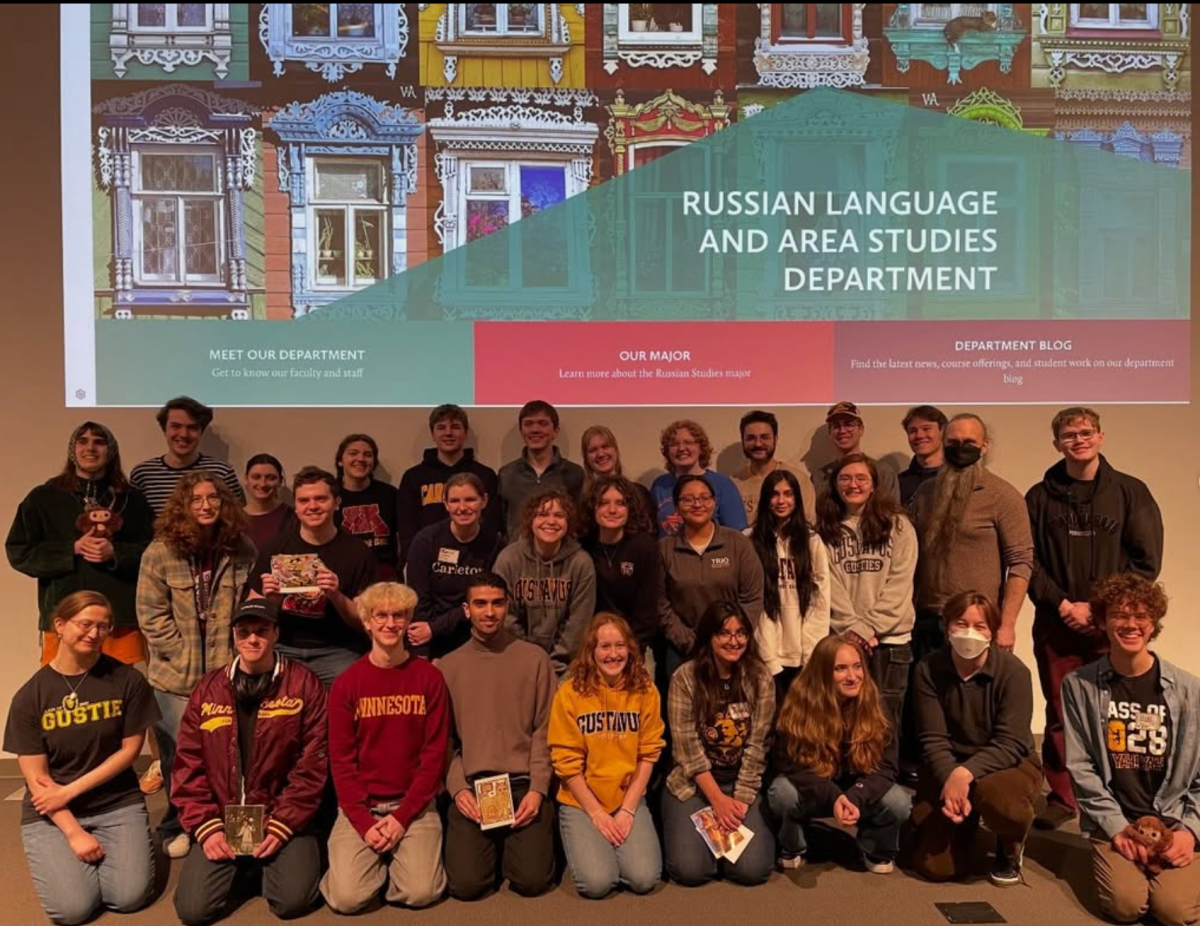
Late in the semester, many senior international students gathered in the Taylor Center for Equity and Inclusion. They lined up at Brisa’s office to pick up graduation gowns and caps, rented at no cost by the College for students that cannot afford the full price. They laughed, tried on their regalia.
For a moment, the borders disappeared. They were simply here, in this room, having done something undeniable.
But even in that moment of landing, of finalizing a chapter, the questions do not go quiet. Graduation is not a destination so much as a threshold, and international students know thresholds better than most. They have stood at enough of them — at customs, at visa offices, in new cities with heavy luggage and uncertain plans — to understand that crossing one never means you are done crossing. The gown gets returned. The question of what comes next does not.
What any migration asks of a person is rarely what they expected when they first decided to go. The opportunity they imagined often turns out to be something different, something harder and more interior, much more about what the act of leaving and staying teaches. In the places between, we are all moving from one place to another, native to a land or not.
Undeniably, we move forward.