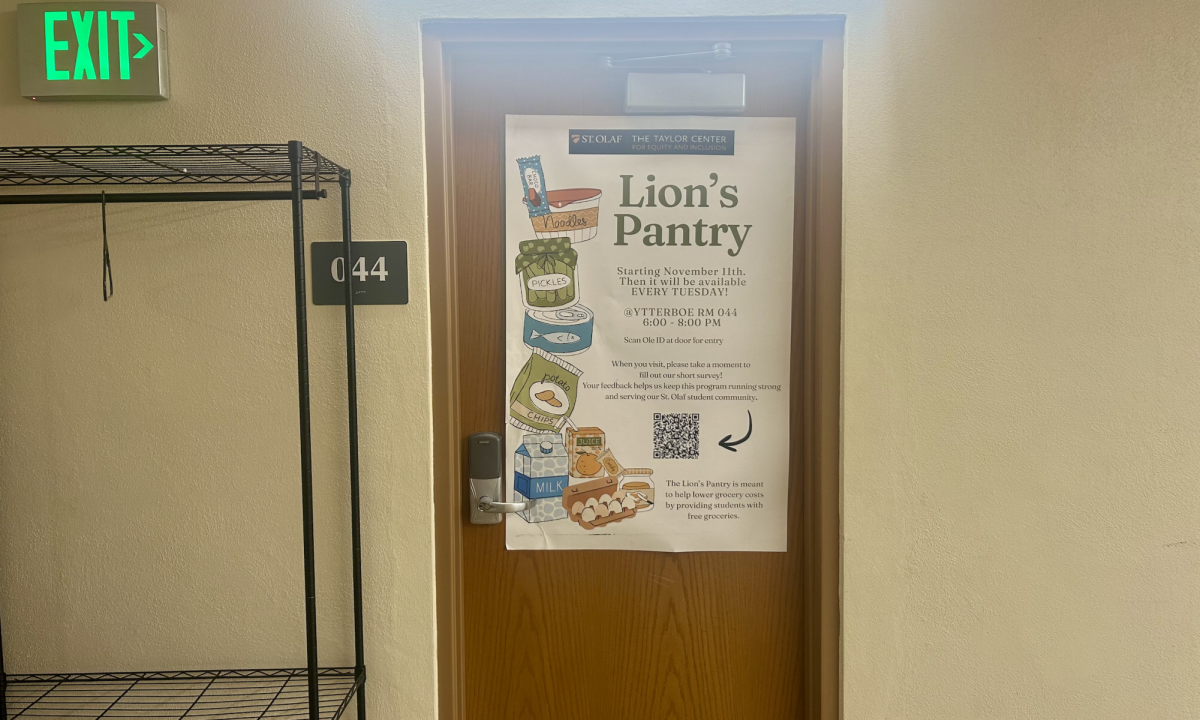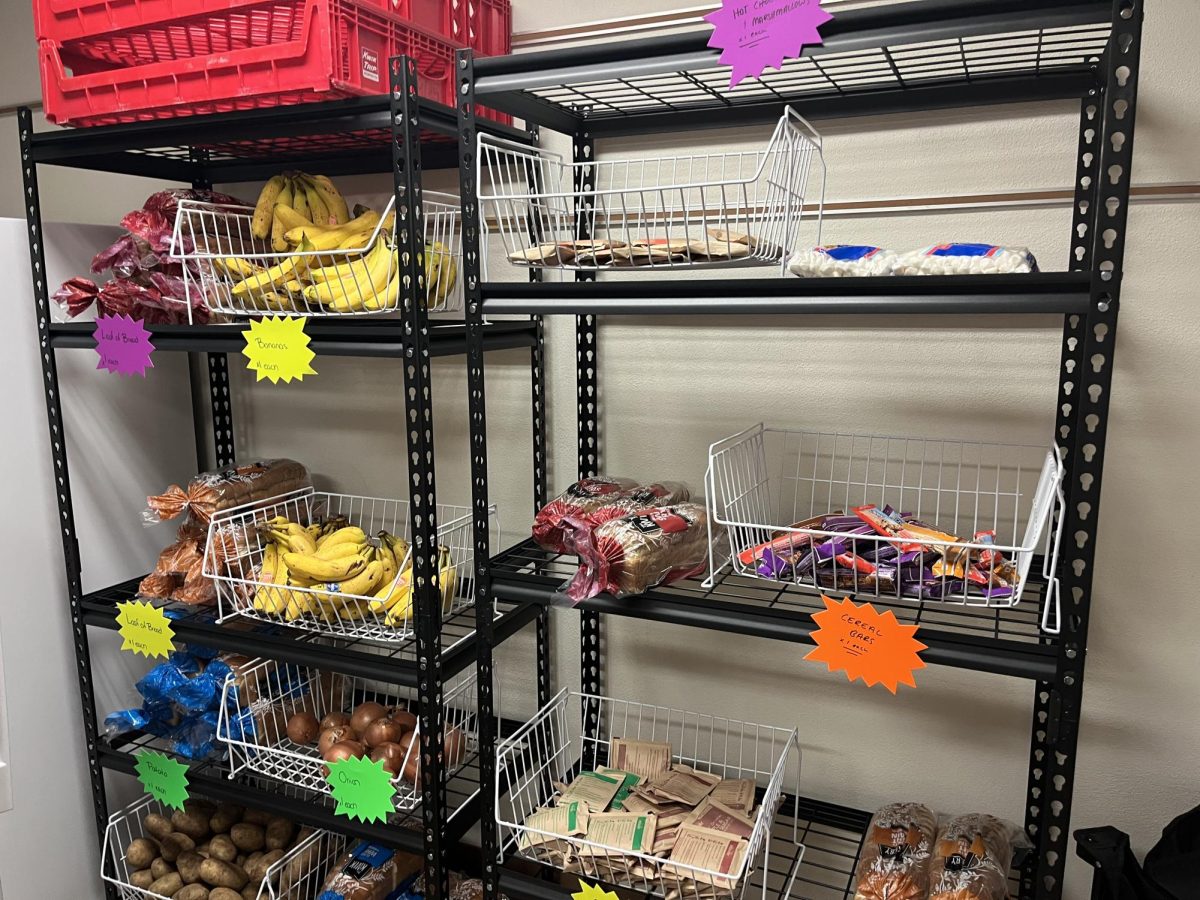
On Nov. 11, the Taylor Center for Equity and Inclusion — in conjunction with Residence Life — launched the Lion’s Pantry. The pantry is a room full of free produce and dry goods for students to take as needed, aiming to help students who may not have easy access to food due to transportation difficulties or financial barriers. The Lion’s Pantry is open in Ytterboe 044 every Tuesday night from 6 to 8 p.m.
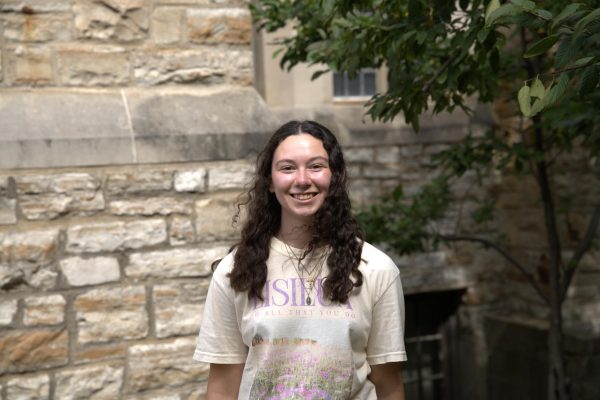
In an interview with The Olaf Messenger, Associate Director of International Student Programs Brisa Zubia said that the Lion’s Pantry was first established during the COVID-19 pandemic when more students stayed on campus for longer periods of time, such as over academic breaks. It evolved to “grab-and-go” stations during breaks for students who remained on campus. Now, thanks to private donors, donations, and a grant from the state, the Taylor Center hopes to keep the Lion’s Pantry open and accessible to all students throughout the entire year.
To help gauge student interaction with the Lion’s Pantry, the Taylor Center created a survey, which they’ve asked all students utilizing the space to fill out when they leave. The survey asks students what items or produce they would like to see in the pantry.
“Right now, a lot of our knowledge is coming from breaks — items that enrich or increase the volume of a meal,” Zubia said. “We rely heavily on the survey; it’s super helpful to see [the responses] and ask, ‘What is a student looking to have in their dorm to help as a buffer for some meals?’”
In terms of restocking and distribution, student workers purchase new items for the pantry over the weekend, checking expiration dates and the produce. While providing necessary items to students, the Taylor Center also hopes to include surprise items; for example, they once had hot chocolate packets and mini marshmallows for students to enjoy.
They also see it as a way to connect with local food distributors. “We’re hoping, now that we have a permanent space, to build connections with our local distributors where we may have greater access to an array of food,” Zubia said. “Previously, we haven’t had a permanent space, [so] it’s been hard to bridge and strengthen these relationships.”
For the future of the program, Zubia said she hopes that the Taylor Center can rely on students respecting the honor code, taking whatever they need while being mindful that this is a space for all students. She also said it was a way to destigmatize the need for food.
“I want to be cognizant that there is still a stigma around the utilization of groceries or free food, that students know they can go, scan, and there’s no judgment. They can take what they need,” Zubia said. “This is a community effort.”