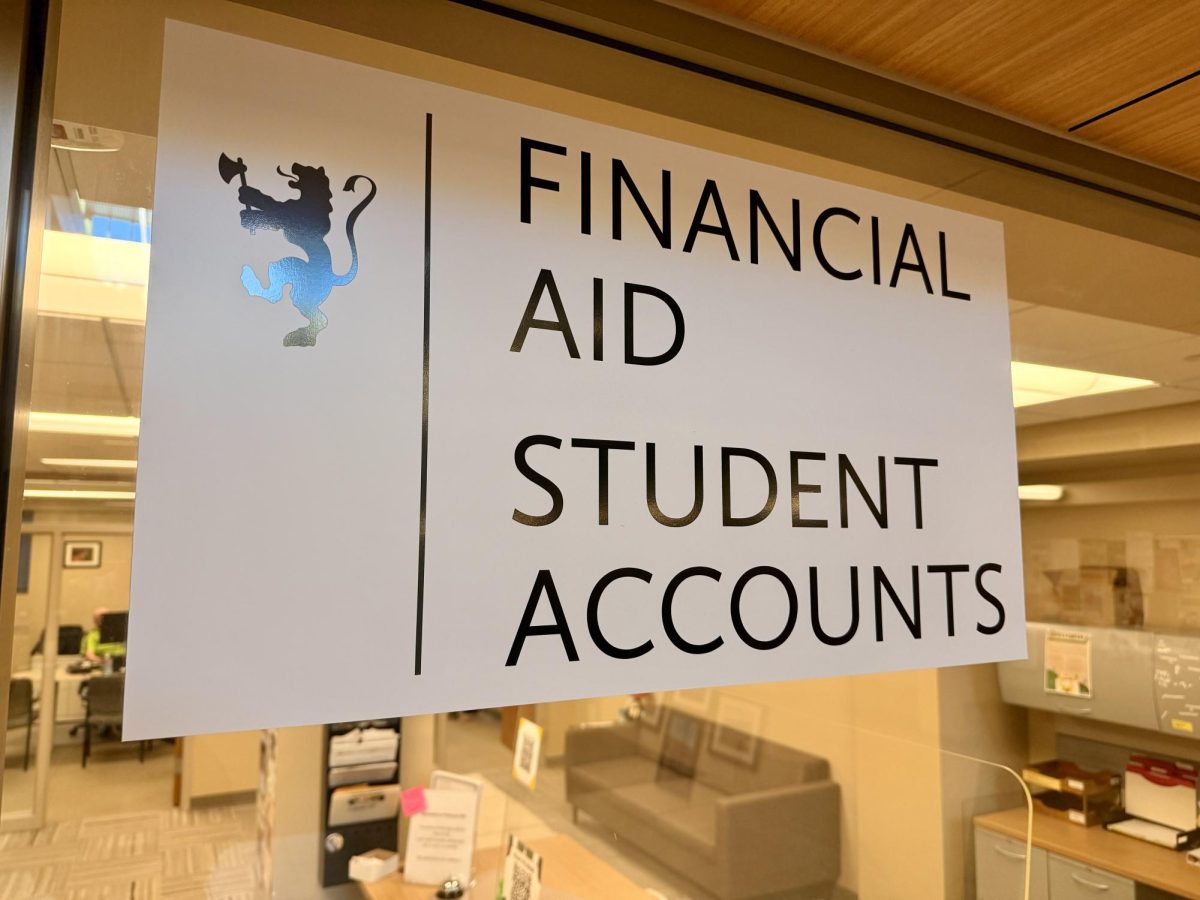
Financial Aid has made the decision to hold students to their work awards, no longer granting extensions upon request. The change comes after many students — typically underclassmen — struggled to find employment on campus during the fall semester. The stricter enforcement aims to help all students with work awards to find jobs, but it also means that once a student reaches their full work award, they can no longer work on campus for the remainder of the academic year.
Financial Aid’s policy has always been that students can only work until they reach their award limit. However, during the COVID-19 pandemic, it became commonplace for students to be granted extensions due to the lack of students on campus and the extra funds available.
“Increasing students’ work awards was a way for students to earn more money, but also [to] make sure that core services were still being offered,” Student Employment Administrator Luke Wood said in an interview with The Olaf Messenger. “But now, we find ourselves in a different position where we have students who aren’t able to find work.”
The official announcement came in an email from Director of Financial Aid Steve Lindley on Feb. 12. However, some students knew about the decision as early as December, causing frustration and concern over their financial situations with the change coming in the middle of the academic year.
“It was traveling around by word-of-mouth and causing a lot of panic,” Josie Scozzari ’26 said in an interview with The Olaf Messenger. “I would’ve made different financial decisions if I had known about it at the beginning of the year or even at the end of last semester.”
In an interview with The Olaf Messenger, General Counsel and Vice President for Human Resources Carl Crosby Lehmann ’91 explained that St. Olaf has a commitment to meet the financial needs of all students, and a portion of that commitment can come in the form of work awards. Because of this, the decision was made sooner rather than later, so students can start meeting their financial obligations.
“It’s becoming an equity issue,” Wood added. “We view these campus positions as a place for students to explore vocation and gain skills for the workforce, and we want as many students to have as many opportunities as possible.”
With the policy change, Financial Aid is implementing an appeals process for students who experience a significant change in their financial situation or if their job position requires special skills that cannot be fulfilled by another student.
“We anticipated that there would be people who felt like this was a major change, so we needed to have some way of minimizing the impact of that,” Crosby Lehmann said.
Even with the appeals process, some students still have concerns.
“It’s especially frustrating for international students because we cannot work off-campus at all,” Kyrylo Koltunov ’28 said in an interview with The Olaf Messenger. “It feels weird that they’re limiting people knowing that some of us only have this option.”
“I see both sides,” Scozzari said. “I think it’s true that everybody should have the opportunity to work, and I understand that the purpose is to create more jobs on campus. But I don’t think it takes into account everyone’s financial situation.”