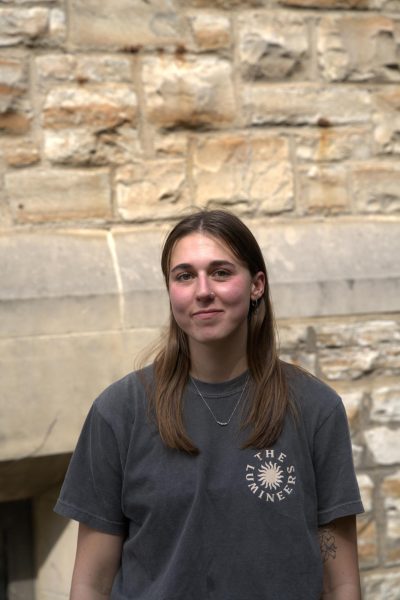
President of the Student Government Association (SGA) Fiona Mundy ’26 and Sophie Smith ’26 have teamed up to organize a mutual aid program at St. Olaf.
According to Mundy and Smith, mutual aid programs are bottom-up, community-based organizations that connect people with personalized assistance. They are different from non-profit organization systems, which often have barriers to entry. In an interview with The Olaf Messenger, Smith defined the core of mutual aid to be “[n]eighbors supporting their own neighbors … to feel safe and supported, which has led to a beautiful sense of community and solidarity.”
At St. Olaf, students can submit requests through an online form, and a trained student volunteer will respond. The form, created through Qualtrics, is private and secure and is viewed only by a small group of volunteers.
A volunteer is on call from 9 a.m. to 5 p.m. to monitor submissions. When a request is received, the on-call volunteer alerts the rest of the team through a group chat on Signal and coordinates a volunteer to fulfill the request.
Requests include drivers or buddies for picking up grocery orders and prescriptions, giving rides within and beyond Northfield, and anything else students may need off campus. Students can sign up to be a volunteer here.
Mundy and Smith cited several motivations for creating this mutual aid program. Starting in January, students were requesting help on Fizz or via word of mouth.
“To me, that feels unsafe, and when there is anonymity behind it, there is less trust behind it,” Mundy said in an interview with The Olaf Messenger.
In search of a better system to formalize this process, both Mundy and Smith were inspired by people they work with in Northfield who are doing this for their own communities. They decided to translate the skills they have learned in town to St. Olaf’s campus.
While the program was originally born amidst the alarming Immigration and Customs Enforcement (ICE) occupation in the Twin Cities and greater Minnesota area, Operation Metro Surge is reportedly over and ICE presence in Minnesota has decreased. However, some members of the campus community still may not feel safe, especially international students.
“We have seen that this administration will keep going after vulnerable populations, so a program like this can continue to help any people in any vulnerable situations. It’s important no matter [what],” Smith said.
The value in the mutual aid system doesn’t lie solely in its response to Operation Metro Surge. “Students are gonna look out for each other even if other groups may not,” Mundy said. “Having this type of support system coming from the student level is going to be really important.”
The mutual aid program is in its early stages, and Smith and Mundy are working to improve the system as it gets advertised across campus. As seniors, they are also looking ahead and making plans that will keep the program operating for years to come.